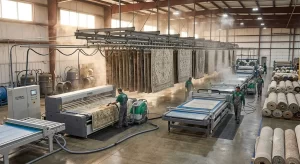

A carpet washing factory is a specialized facility designed for the efficient washing, rinsing, water extraction, drying, finishing, and packaging of carpets on a commercial or industrial scale. Unlike traditional manual cleaning, modern carpet washing factories use specialized machinery and organized production lines to process large quantities of carpets while maintaining consistent cleaning quality.
What Is a Carpet Washing Factory?
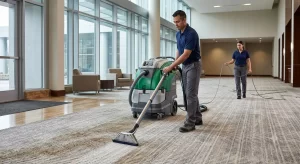
A carpet washing factory is a professional facility where carpets are cleaned using industrial equipment and systematic processes. These facilities are commonly used by carpet cleaning companies, commercial laundries, hotels, and professional carpet care businesses.
A complete carpet washing operation may include:
- Carpet dust removal machine
- Automatic carpet washing machine
- Rinsing system
- Industrial carpet centrifuge
- Carpet drying system or drying room
- Carpet brushing and finishing equipment
- Inspection and packaging area
The exact equipment required depends on the carpet types, daily workload, available space, and desired production capacity.
How Does a Carpet Washing Factory Work?
A professional carpet washing factory generally follows a structured workflow:
Dust Removal → Washing → Rinsing → Water Extraction → Drying → Finishing → Inspection → Packaging
Organizing the equipment in the correct sequence helps reduce unnecessary handling and prevents bottlenecks during production.
1. Carpet Dust Removal
Before washing, carpets are processed through a dust removal machine to remove loose dust, sand, hair, and other dry particles.
Removing dry dirt before washing can improve the washing process and help reduce the amount of solid contamination entering the washing system.
2. Carpet Washing
The carpet is then transferred to an automatic carpet washing machine. Industrial washing machines can use rotating brushes, water spray systems, detergent application, and controlled conveyor movement to clean the carpet.
The washing settings can be adjusted according to the carpet material, level of contamination, and required cleaning performance.
3. Rinsing
After washing, the carpet is thoroughly rinsed with clean water to remove remaining detergent and loosened dirt.
Effective rinsing is an important part of professional carpet cleaning because it helps leave the carpet cleaner and reduces the possibility of detergent residue remaining in the fibers.
4. Water Extraction
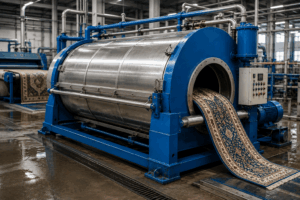
After rinsing, the carpet contains a considerable amount of water. An industrial carpet centrifuge or wringing machine is used to remove excess water.
Water extraction is an important stage because reducing the moisture content before drying can significantly improve the overall workflow and reduce drying requirements.
5. Carpet Drying
After water extraction, carpets are transferred to a drying room or another suitable drying system.
Efficient drying is essential for maintaining production speed. If washing capacity is high but drying capacity is limited, drying can become a major bottleneck in the factory.
6. Finishing and Inspection
Once the carpet is dry, it can undergo final brushing, grooming, inspection, and quality control.
The carpet is checked for:
- Remaining stains
- Dirt or contamination
- Fiber condition
- Moisture
- Overall appearance
- Cleaning quality
Any carpet requiring additional treatment can be processed again before packaging.
7. Packaging
After final inspection, carpets are rolled, packed, labeled, and prepared for delivery or storage.
Proper packaging helps protect cleaned carpets from dust and contamination before they are returned to customers.
Main Equipment Used in a Carpet Washing Factory
A modern carpet washing factory may use several types of specialized equipment.
Automatic Carpet Washing Machine
The automatic carpet washing machine is the central part of many professional carpet washing lines. Depending on the design, it may include multiple brushes, conveyor systems, water spray systems, detergent dosing, and control systems.
Industrial models are available in different washing widths and production capacities to suit different factory sizes.
Carpet Dust Removal Machine
A dust removal machine removes dry dust, sand, hair, and loose particles before wet washing. This helps prepare the carpet for the next stage of the cleaning process.
Industrial Carpet Centrifuge
The centrifuge removes excess water from washed carpets using centrifugal force. By reducing the amount of water remaining in the carpet, it helps shorten the drying stage and improve production efficiency.
Carpet Drying System
Drying rooms, air circulation systems, dehumidifiers, and other drying solutions can be used depending on the factory design and local climate.
Carpet Finishing Equipment
Finishing equipment can be used to brush and groom carpet fibers after drying. This helps improve the final appearance before inspection and packaging.
Benefits of a Professional Carpet Washing Factory
- Higher Production Capacity: Industrial equipment allows businesses to process larger quantities of carpets.
- Consistent Cleaning: Controlled machinery helps produce more consistent results.
- Faster Processing: Organized production lines reduce unnecessary handling and processing time.
- Efficient Water Extraction: Centrifugal or mechanical extraction reduces excess moisture before drying.
- Reduced Drying Time: Lower moisture content can help improve drying efficiency.
- Better Workflow: Each machine performs a specific stage of the cleaning process.
- Professional Results: Inspection and finishing stages help maintain quality before delivery.
How to Improve Carpet Washing Factory Efficiency
A successful factory should be planned as a complete workflow rather than as a collection of individual machines.
Important factors include:
- Daily carpet volume
- Maximum carpet size
- Carpet material and construction
- Washing machine capacity
- Water availability
- Water extraction capacity
- Drying capacity
- Factory floor space
- Electrical requirements
- Labor requirements
- Maintenance and spare parts
- Safety systems
The washing, extraction, and drying capacities should be balanced. Increasing washing capacity without increasing drying or extraction capacity can create production bottlenecks.
Why Choose an Industrial Carpet Washing System?
For businesses handling a large number of carpets, an industrial washing system can provide a more organized alternative to completely manual cleaning.
A properly designed production line can connect dust removal, washing, rinsing, water extraction, drying, finishing, inspection, and packaging into a smooth workflow. This can help businesses improve productivity while maintaining consistent carpet cleaning standards.
Conclusion
A carpet washing factory provides a professional and systematic solution for cleaning large quantities of carpets. By combining specialized washing, dust removal, water extraction, drying, and finishing equipment, businesses can create an efficient production workflow.
The right factory setup should be selected according to carpet types, daily production requirements, available space, water and electrical infrastructure, drying capacity, and long-term operating needs. A well-planned carpet washing factory can help improve productivity, reduce processing time, maintain carpet quality, and provide reliable service to customers.